
Which NiSi system is right for me?
Finding your way around the wide NiSi range isn’t always easy, but a wide range has a purpose: it’s what gives you compatibility and flexibility. With a few simple questions we’ll guide you to the right products for your lens.
Does your lens have a front filter thread?
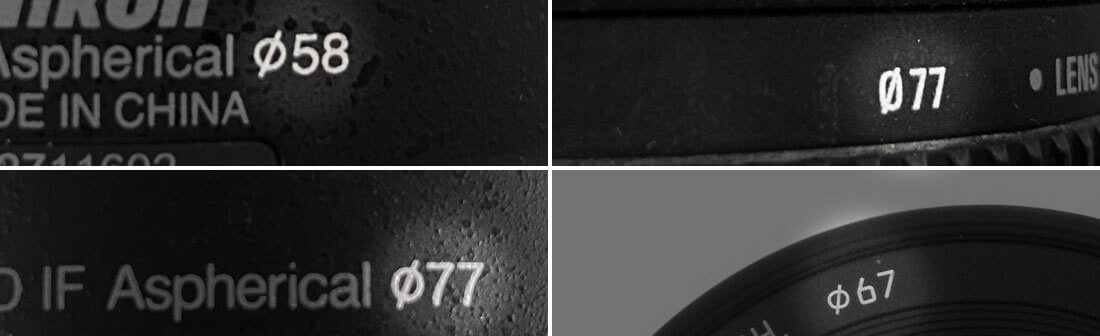
It’s the first question: take a quick inventory of the lenses you want to use filters on and check whether they have a front filter thread. If all or almost all do, note the size too: it’s usually a number in mm next to the “⌀” symbol, on the front or on the barrel.
Filter thread up to 82mm: 100mm square, screw-in or magnetic
You can use both square filters with the 100mm holder (the 100 System) and screw-in filters or JetMag Pro magnetic filters. If you haven’t chosen yet, bear this in mind:
- square filters fit lenses with a 49 to 82mm filter thread with no problem (below 49mm you need third-party step-up rings);
- screw-in filters are specific to each size: you can buy a larger one and use third-party adapter rings, but it isn’t recommended for big differences (for example from 52 to 82mm);
- NiSi 100mm holders take a polariser (included in the V7 kits) and 3 more square filters, usually an ND and up to two GNDs: 4 filters in all;
- stacking several screw-in filters isn’t recommended, for practical reasons and possible vignetting: NiSi circular filters have a front thread so you can, but two filters at most;
- the GND filter belongs to the square system, because it has to be moved to the horizon line and in screw-in form the transition would stay fixed; or you can use it with the JetMag Pro, with the dedicated adapter.
Screw-in circular filters
Recommended if you’re starting out and don’t know the tools yet: they cost less and a single screw-on filter is very easy to use.
100mm square system
For those who already know how to use a polariser and NDs: more flexible, more possibilities, and there’s the GND. Holder, 100×100 NDs, GNDs or a kit.
JetMag Pro magnetic
Less vignetting than screw-in circular filters (they’re thinner and have no thread), they mount and swap in an instant, and you can stack several filters, GND included.
Square or magnetic? If you use the GND a lot and shoot very “static”, as in landscape, and rarely handheld, when travelling or for reportage, the square system may still be the best for you. If you rarely use the GND and often have the camera in hand or on your shoulder, magnetic is more versatile. And nothing stops you from having both.
Still torn between circular and square? We recommend this free online course on filters.
Filter thread from 86 to 95mm: JetMag Pro 95mm
If your lens has an 86 or 95mm filter thread, we recommend the 95mm JetMag Pro system: all the advantages of NiSi magnetic filters, including the holder for square GNDs, with no limits on using filters.
No filter thread: 150mm square with the S6 holder
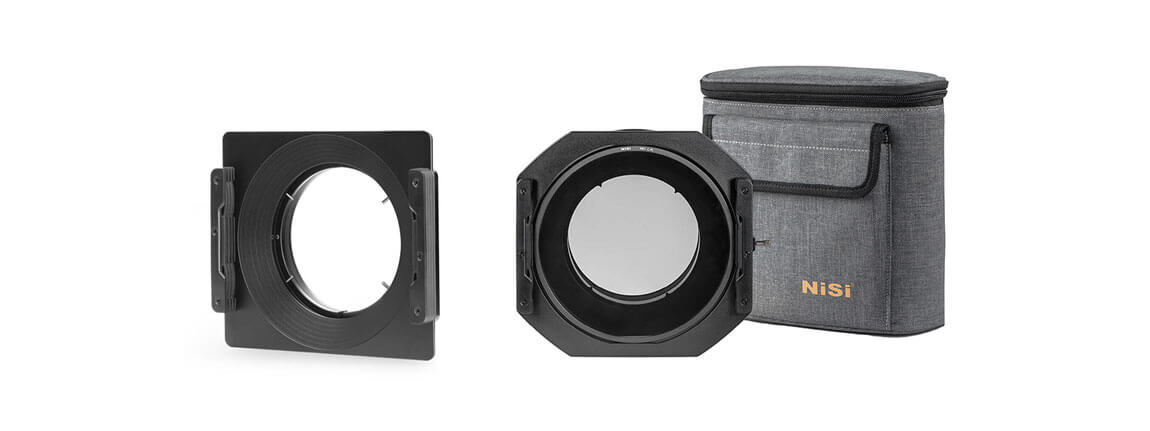
Your main lens doesn’t take screw-in filters: for example the Tamron 15-30 f/2.8 (G2 too), the Nikon 14-24 f/2.8 or the Sigma 14-24 f/2.8 (for Nikon and Canon, and the DG DN version for Sony). Here you need the 150mm system, with the NiSi S6 holder and its polariser. The filters are 150x150mm (ND) and 150x170mm (GND).
Polarisers can give a slight colour cast by their nature: they remove light reflected from non-metallic surfaces, and with it part of the colour when it lies mostly in the reflected light. The comparison between True Color, Landscape and PRO should be read allowing for these normal differences.
The S6 always comes with the polariser, a bag and, almost always, an adapter for other threaded lenses. If you have several lenses without a filter thread, you can buy just the main adapter ring, which is interchangeable:
- all NiSi S6 holders, specific to each lens, and the rings to use them on threaded lenses;
- the main rings and spare parts, to attach the same filters to several lenses.