
NiSi ND-VARIO variable filters with nano coating in optical glass

Variable ND filters are not true ND filters: they are made of two stacked polarising films that rotate at a precise angle and absorb a variable amount of light. Only with the best glass, precise construction and the best films can you build a variable neutral density filter that is also high quality. Although a variable filter will never be a true ND, our variable NDs get as close as possible.
Always weigh up the pros and cons, but if speed and ease of use are a must, nothing beats a VND filter.


Variable ND: ultimate simplicity with NiSi quality
NiSi has broken the mould of third-party manufacturing, traditional distribution through several middlemen and build compromises sold at a high markup. NiSi designs, makes and distributes its own products directly (or through a select group of partners). This lets us use top-quality glass and components, with no compromise, at a price similar to other brands that have to compromise on quality.
Exclusive optical glass
among photographic filter makers, only NiSi has it: you find it in the best photo and cinema lenses.
NiSi Nano Coating
developed specifically to make the filter repel water and oil, while keeping sharpness extremely high.
No “X effect”
the films that vary the density are designed to minimise defects and blotches*, eliminating the “cross” effect that most variable ND filters suffer from.
Which variable ND is right for you?
Choose how you use it and, if you like, your lens: we’ll point you to the best filter and the right size.
What’s your lens diameter?
You’ll find it on the barrel or on the back of the lens cap, next to the ⌀ symbol. Or search for your lens.
No lens with this name. Try the focal length or the brand. Write to us
JetMag Pro magnetic variable ND 3 products
The JetMag Pro System is perfect for using the NiSi Vario ND 1-5 stops flexibly: with this filter as a base you can add the JetMag Pro ND16 (4 stops) and get a variable 5-9 stops. You can also add the Black Mist filter.
- No vignetting at 15-16mm with Vario 1-5 stops + ND16 4 stops
- No vignetting at 16-17mm with Vario 1-5 stops + ND16 4 stops + Mist filter
 JetMag Pro – Creator Kit Magnetic Variable ND 1-9 stops & Mist
4.90
(10) reviews
JetMag Pro 67 · 82 · 95mm
Price range: £299.90 through £449.99
JetMag Pro – Creator Kit Magnetic Variable ND 1-9 stops & Mist
4.90
(10) reviews
JetMag Pro 67 · 82 · 95mm
Price range: £299.90 through £449.99
 JetMag Pro – Flex Kit Magnetic Variable ND 1-5 stops with rings and caps
5.00
(1) reviews
JetMag Pro 67 · 82 · 95mm
Price range: £215.90 through £299.99
JetMag Pro – Flex Kit Magnetic Variable ND 1-5 stops with rings and caps
5.00
(1) reviews
JetMag Pro 67 · 82 · 95mm
Price range: £215.90 through £299.99
 JetMag Pro – ND-VARIO 1-5 stops (0.3-1.5) True Color Nano-coating
5.00
(5) reviews
JetMag Pro 49 · 67 · 82 · 95mm
Price range: £109.90 through £194.99
JetMag Pro – ND-VARIO 1-5 stops (0.3-1.5) True Color Nano-coating
5.00
(5) reviews
JetMag Pro 49 · 67 · 82 · 95mm
Price range: £109.90 through £194.99


Screw-in variable NDs 2 products


TRUE COLOR ND-VARIO/PL 1-5 stops screw-in
Two essential filters in one accessory: it cuts incoming light and at the same time removes unwanted reflections from water, glass and foliage. With one filter you get full control over exposure and polarisation, carrying fewer filters and spending more time shooting.
Designed to deliver accurate, neutral colour rendition across the whole adjustment range. Unlike many other polarising filters, it adds no magenta tint or warm cast, either in RAW for photography or in LOG for video.
- Independent VND and PL control: adjust density and polarisation separately.
- True Color Technology: natural, realistic colours with no colour casts.
- Ultra-slim frame: no vignetting, even with 15 mm ultra-wide lenses.
- Nano Coating on 4 sides: resistant to water, oil and reflections; easy to clean.
- Luminescent markers: easy adjustment even in low light.
- Compatible with the 6-Pin Kit and the SWIFT system; metal cap.


TRUE COLOR ND-VARIO 1-5 stops screw-in
The screw-in NiSi True Color ND-VARIO 1-5 stops variable filter is ideal for photographers who want to get into long exposures and for videographers who want to control light in real time while shooting, without introducing any artefacts or aberrations.
The screw-in version is preferred for use on its own. If you want to add (now or later) a 4-stop filter for more light reduction or a Mist filter for the highlights, we recommend the JetMag Pro magnetic version.
- Reduces exposure by 1 to 5 stops
- SLIM build and precise rotation
- True Color film added to the optical glass for high colour fidelity with no “X effect”
- HUC (High-ultra Clarity) optical glass, a NiSi exclusive, with Nano and water-repellent coating for easy cleaning
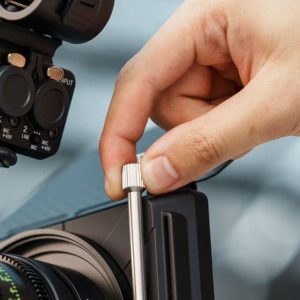
- Two-tone design, textured materials for a secure grip and a removable pin
Screw-in and magnetic ND-Vario: what are the differences?
There are no optical differences between the two versions, only in how you use them.
Screw-in
The screw-in variable ND filter uses the lens’s standard front thread.
- Screws straight onto the lens and has a front thread for other filters
- Perfect if you only use the variable ND and keep it on most of the time
- Using more than one filter at a time isn’t very practical
- Once fitted you adjust only light reduction, not polarisation (for that there’s the VND/PL)
JetMag Pro magnetic
The JetMag Pro magnetic VND fits with an adapter ring and opens up the whole JetMag Pro range to you.
- Attaches to an adapter ring, threaded on the lens side and magnetic on the filter side, which you can leave on all the time thanks to the magnetic caps
- Easy to use several filters together: every filter in the JetMag Pro range
- Quick to fit and remove, with a safety lock
- Light reduction and polarisation adjustable in one filter
Disclaimer: VND filters are made of two optical glass elements that rotate against each other. Because of this construction they are neither waterproof nor weather-resistant. The hydrophobic coating is applied only to the front and rear surfaces, to repel water, fingerprints and dirt: it does not make the filter waterproof, nor does it stop water or moisture getting into the mechanism.
How many stops do you need?
For video, the 180° shutter is what counts: frame rate, aperture and light tell you how many stops to cut. For photos, how much you want the water to move.
Turn the VND ring
You need
VND 1-5 stops
The VND 1-5 stops goes from 1 to 5 stops as you turn the dial: the most popular for video.
VND + ND 4 stops
Beyond 5 stops, add a 4-stop ND to the VND: the 1-9 stop kits already include both.
Over 9 stops
You need a stronger fixed ND together with the VND, for example a 6-stop ND64.
No ND filter needed
In this light, the aperture you want and a 180° shutter are enough on their own.
Light: the classic exposure table (EV at ISO 100). The result is a guide: a real scene may need half a stop more or less.


Turn the dial: the glass darkens and the sea turns silky. Real photos with ND8 (3 stops) and ND1000 (10 stops). Photos by Alessio Putzu, from the article “Which ND filter to choose”.
Variable filters for video (and photos!)
The ND Vario filter is perfect for videographers, but it has plenty of uses in photography too. With a single filter, and combinations with other filters, you handle every lighting situation in your videos and photos* and try out different shutter speeds.
NiSi ND VARIO filters are also particularly suited to portrait photography, when you want to keep a wide aperture, and so shallow depth of field, in bright light.
Main uses of the VND for video
- Precise control of shutter speed to keep the best ratio between fps and shutter speed
- Wide apertures even in strong light
- Control of light, and shutter speeds, even in long scenes with big changes in light
Main uses of the VND for photos
- Wide apertures for more control over background blur in portraits, even in strong light
- Long exposures in different lighting conditions without changing filter
- Adapting panning shots to different conditions with a single filter
Controlling reflections as well as light intensity
ND vario filters hide two paired polarising films inside: as well as light reduction, you can also adjust reflections.
This isn’t possible with every Vario ND: you need to rotate the whole filter (not just the front half) and the filter must be built for it. With the magnetic mount of the JetMag Pro Vario ND 1-5 stops, once you’ve rotated the front part to set the light reduction, you rotate the whole filter as one and see only the polarising effect. In the screw-in version there’s the VND/PL, with the two adjustments kept separate.
NiSi VND 1-5 stops and the JetMag Pro system: how does it work?
- Choose the ring or rings that fit your lenses by front thread diameter, so you use one filter on several lenses.
- Screw the magnetic adapter ring onto your lens.
- Bring the JetMag Pro filter close and let the magnets attach it.
- Lock it: when you attach it, don’t line up the coloured handle with the white line on the ring; once attached, rotate it until the handle lines up with the white line: now it won’t fall off even if knocked. To remove it, turn the handle out of line.

*NiSi variable filters are the state of the art for a variable filter but, in any case, variable filters are not true ND filters (whatever the brand): they are always built from two paired polarisers. NiSi uses the best-quality glass and pays the utmost attention to construction and the polarising film; even so, a variable ND filter will never match the quality of an ND filter with the same construction and materials. For applications where the features of a variable filter aren’t essential, we always recommend a true ND filter.
What our customers say
-
Really enjoying this product! Love the flexibility and the modularity of this VND.
JetMag Pro – Creator Kit Magnetic Variable ND 1-9 stops & Mist -
The ND-Vario filter is superb, generating exception image quality even on a 500mm zoom.
TRUE COLOR ND-VARIO 1-5 stops (0.3-1.5) Nano-coating with Optical Glass