
If you have already decided on NiSi and you shoot video, there is a good chance you are stuck on one question: the JetMag Pro ND-VARIO or the True Color ND-VARIO? Both give you 1 to 5 stops. Both use the same True Color glass. Both cost roughly the same. So what actually separates them?
The short answer is that you are not choosing between two filters. You are choosing between buying a filter and buying a mount. This guide explains what that means in practice, and which one belongs on your camera.
The short answer
- The simplest, cheapest option, and the widest choice of sizes → the screw-in True Color ND-VARIO. Thread it on, leave it there. Available from 40.5mm to 105mm.
- The same simplicity, plus a polariser → the True Color ND-VARIO/PL, where density and polarisation are adjusted on separate rings.
- Everything the other two do — polarisation included — plus speed, stacking and one filter across several lenses → the JetMag Pro ND-VARIO. This is the one that opens a system rather than solving a single lens.
If you want the reasoning, read on.
First, what is identical
It is worth clearing this up early, because it is where most of the confusion sits. Optically, these filters are far closer than the product pages might suggest.
All of them give you the same 1 to 5 stops of light reduction (ND2 to ND32). All of them use NiSi’s True Color technology, which keeps your footage neutral instead of drifting warm or magenta as you rotate towards the denser end — the thing that makes cheap variable NDs so painful to grade. All of them use nano-coated optical glass that repels water, oil and fingerprints. And critically, none of them produce the dreaded X pattern, the dark cross that appears on wide lenses when a poorly designed variable ND runs into cross-polarisation.
All three can also control reflections. That surprises people, so it is worth stating plainly before we go further: the polarising ability is not exclusive to the /PL version. What differs is how you reach it.
So the glass is not the deciding factor. Whichever you choose, you are looking through comparable optics. What changes is everything around the glass.

 TRUE COLOR ND-VARIO 1-5 stops (0.3-1.5) Nano-coating with Optical Glass
5.00
(11) reviews
⌀ 40.5–105mm
Price range: £89.00 through £279.00
TRUE COLOR ND-VARIO 1-5 stops (0.3-1.5) Nano-coating with Optical Glass
5.00
(11) reviews
⌀ 40.5–105mm
Price range: £89.00 through £279.00
 New
TRUE COLOR ND-VARIO/PL 1-5 Stop (0.3-1.5) Nano-Coating With Optical Glass
⌀ 49–95mm
Price range: £114.90 through £194.90
New
TRUE COLOR ND-VARIO/PL 1-5 Stop (0.3-1.5) Nano-Coating With Optical Glass
⌀ 49–95mm
Price range: £114.90 through £194.90
 JetMag Pro - ND-VARIO 1-5 stops (0.3-1.5) True Color Nano-coating
5.00
(5) reviews
JetMag Pro 49 · 67 · 82 · 95mm
Price range: £109.90 through £194.99
JetMag Pro - ND-VARIO 1-5 stops (0.3-1.5) True Color Nano-coating
5.00
(5) reviews
JetMag Pro 49 · 67 · 82 · 95mm
Price range: £109.90 through £194.99


The screw-in: True Color ND-VARIO
This is the classic. It threads onto the front of your lens and it stays there. No extra parts, nothing to lose, nothing to think about.
Its real advantage is coverage: it is available in fifteen sizes, from 40.5mm right up to 105mm. If you shoot on a compact prime with a 43mm thread, or on a big 105mm zoom, this is the only variable ND in the NiSi range that fits you at all.
The stop markings are engraved on the ring, and a removable pin gives you a physical handle for precise adjustment: take it out when you want a clean, low-profile filter, put it back when you want tactile control. A lens cap and a Filter Pouch PRO are included in the box.
One detail worth knowing before you buy: the front thread is one step larger than the rear thread. A 67mm filter has a 72mm front thread, a 72mm has a 77mm front, and so on. That matters if you plan to put a lens hood or another filter in front of it.

The same filter with a dedicated polariser: True Color ND-VARIO/PL
The ND-VARIO/PL is the screw-in ND-VARIO with one capability added. Everything above still applies; what you gain is a polariser on its own ring.
The practical difference is separation: density and polarisation are adjusted independently, so changing one does not disturb the other. The working order is simple: align the two green dots to lock the polariser, set your ND density, then rotate the polariser ring to taste.
The ultra-slim aluminium frame avoids vignetting even at a 15mm full-frame equivalent, and the stop markings are luminescent: they glow, so you can still read them at dusk or indoors without reaching for a torch. A machined metal lens cap is included.
One caveat, from us rather than the marketing department: avoid adjusting the polariser while you are at the denser end of the range, around 4 to 5 stops. The colours can become excessively saturated. Set your density first, then polarise gently.

The magnetic: JetMag Pro ND-VARIO
Here is where the logic changes completely, and where most of the confusion about sizes comes from.
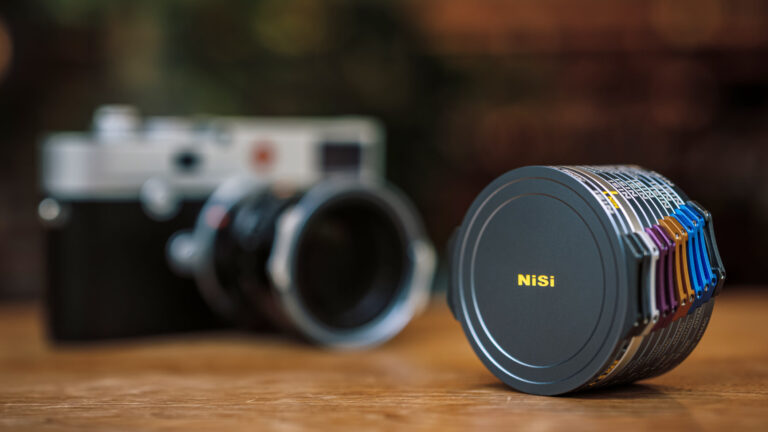
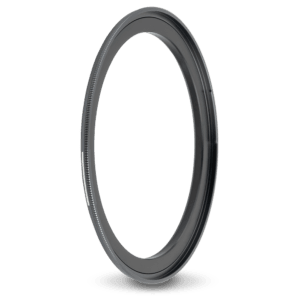
The JetMag Pro ND-VARIO comes in four sizes only: 49MAG, 67MAG, 82MAG and 95MAG. At first glance that looks like a limitation. It is the opposite. Those are not lens thread sizes, they are system sizes. You fit an adapter ring to your lens, and the filter snaps onto the ring magnetically.
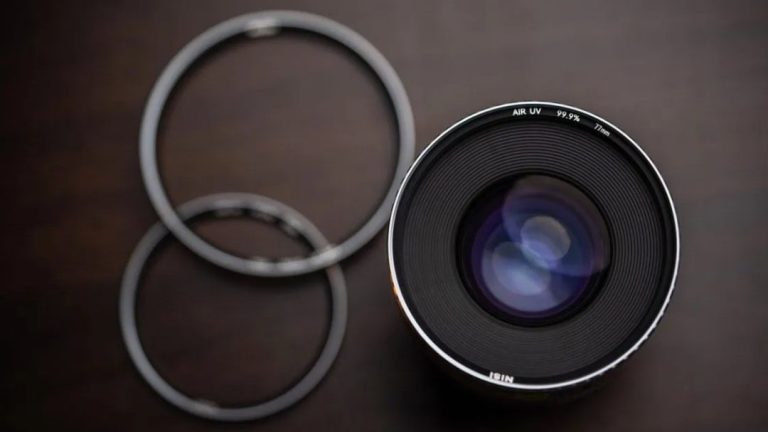
The adapter ring has two independent measurements: the threaded side that matches your lens (39mm through to 105mm) and the magnetic side that matches your filter. Which means the size of your filter is no longer tied to the size of your lens. There are even dedicated rings for ultra-wide lenses with no front thread at all — the Sony 14mm f/1.8, the Nikkor Z 14-24mm f/2.8, the Canon RF 14mm f/1.4 L and the Olympus 7-14mm f/2.8 — used with MaxMag filters.

For video specifically, the JetMag Pro version adds things the screw-in versions do not have:
- A detachable control lever, mountable on either side, for fingertip density changes: the difference between usable and unusable when you are on a gimbal or wearing gloves.
- Hard stops at 1 and 5, so you cannot accidentally rotate past the usable range mid-take.
- Stop markings on both sides of the ring, readable whether you are handheld or looking at the filter from an awkward angle on a rig.
- A magnetic mount with a patented lock: snap on, twist to lock, and it is not coming off until you want it to.
The ultra-slim frame avoids vignetting down to 16mm on full frame. And one practical note that catches people out: the adapter ring is not included with the filter. You choose it separately to match your lens.


Does the JetMag Pro ND-VARIO polarise as well?
Yes — and this is the point most comparisons get wrong.
The JetMag Pro ND-VARIO has built-in polarisation control. Once you have set your density on the front ring, you rotate the entire filter to adjust the polarisation angle, and your exposure stays where you put it. Glare on water, glass and foliage comes down exactly as it would with a dedicated polariser.
So you do not need a separate CPL alongside it, and you are not giving up reflection control by choosing magnetic over the /PL. The JetMag Pro does the job of both screw-in versions. The /PL simply gives you a separate ring for it, which some people prefer for fine adjustment; the JetMag Pro gives you the same result by turning the whole filter, and adds everything else the system brings.
The maths of owning more than one lens
This is where the two approaches genuinely diverge, and it is easier to see with numbers than with adjectives.
Say you shoot on three lenses — 67mm, 77mm and 82mm filter threads. A common enough kit.
| Approach | What you buy |
|---|---|
| Screw-in | Three ND-VARIO filters, one per lens |
| JetMag Pro | One 82MAG ND-VARIO, plus three 82MAG adapter rings |
An adapter ring costs a fraction of a filter, so the magnetic route works out considerably cheaper across three lenses. But the saving is not really the point — the rings are the point. Once they are on your lenses, every other filter in the JetMag Pro system mounts on the same rings: black mist, CPL, graduated NDs, the night filter, the solar filter. You buy the mount once and the system opens up.
The honest flip side: if you own one lens and expect to keep owning one lens, the screw-in is cheaper. The magnetic filter costs a little more, plus the ring, and it adds a component you can misplace. That is a real trade-off and we are not going to pretend otherwise.
The part that matters most for video: stacking
Ask any filmmaker what lives on the front of their lens and you will usually hear the same pair: a variable ND and a mist filter. The ND controls your shutter, the mist takes the digital edge off the highlights. Together they are most of the look.
The moment you want both at once, the two approaches stop being comparable.

The JetMag Pro system was designed for exactly this. Filters stack magnetically, they come apart in a single movement, and the slim profile keeps the stack from creeping into your frame. With screw-in filters you are threading one into another, which takes longer, adds depth in front of the lens, and increases the risk of vignetting on wide angles.
This is the argument that applies even if you only own one lens. The multi-lens maths above is about cost; this one is about what you can actually shoot. If your look depends on more than one filter, magnetic is not a convenience, it is the difference between changing a setup in three seconds and changing it in thirty.
The stack can take one more layer. The JetMag Pro Matte Box clamps onto its own adapter ring in front of the magnetic filters and weighs 140g, so the VND and the mist stay where they are. One thing to know if you shoot wide: NiSi tested it on a Sony 16-35mm f/2.8, which has an 82mm thread: on 82MAG the VND vignettes noticeably at 16mm and is clean from 17mm, while on 95MAG it is clean at 16mm.
If you have not settled on a diffusion filter yet, our guide to the difference between white mist and black mist filters is a good place to start.
One thing no variable ND can do
Whichever you choose, there is a limitation worth understanding, because it applies to every variable ND on the market and not just ours.
A VND is built from two optical elements that rotate against each other. That rotating design is what gives you the continuous range, and it is also why a variable ND is not weatherproof or waterproof. The hydrophobic coating sits on the outer glass surfaces to shed water and make cleaning easier; it does not seal the filter against moisture getting inside.
In heavy rain or sea spray, a fixed ND is the safer tool. It is the sort of thing that is better to know now than to discover on a shoot.
So what do I actually order?
This is the point where people stall, so let us be specific.
If you choose a screw-in
Buy the filter in your lens thread size and you are finished. Check the front of your lens or the inside of the cap for the ∅ symbol — 67mm, 77mm, whatever it says. That is the size you order.
If you choose JetMag Pro: pick the size from your biggest lens
The filter comes in 49MAG, 67MAG, 82MAG and 95MAG. Choose the one that suits your largest lens, because a filter can always sit in front of a smaller lens through an adapter ring, never the other way round. If your biggest lens is 77mm, the 82MAG is your size. Then you add one ring per lens:
| Filter size | Lens threads it covers |
|---|---|
| 49MAG | 39, 40.5, 43, 46, 49mm |
| 67MAG | 49, 52, 55, 58, 62, 67mm |
| 82MAG | 62, 67, 72, 77, 82mm |
| 95MAG | 72, 77, 82, 86, 95mm |
There are also dedicated rings for ultra-wide lenses with no front thread, which work with MaxMag filters, plus a 95mm clamp for cine lenses. The full list is on the adapter rings page.
Or let a kit do the arithmetic
This is what most people should do, because the kits already contain the rings for every common lens below their size. Both come in 67mm, 82mm and 95mm versions:
- The Flex Kit holds the 1-5 stop True Color variable ND, the adapter rings, front and back magnetic caps and a caddy pouch. The 67mm version carries five rings (52, 55, 58, 62, 67mm), the 82mm carries four (67, 72, 77, 82mm), the 95mm carries three (82, 86, 95mm).
- The Creator Kit adds a 4-stop FS ND and a 1/8 Black Mist to the same contents. Stack the fixed ND behind the variable one and you reach 9 stops (ND2 to ND512); the mist gives you the diffusion in the same pouch.
That Creator Kit is worth a second look, because it is the stacking argument made physical: a variable ND, a fixed ND to extend its range, and a mist filter, all designed to snap together in any order. Doing the same with screw-in filters means threading three pieces of glass into one another.
One small thing you only notice once you own a few: the filter handles are colour coded. Blue for ND and graduated ND, gold for diffusion and mist, silver for the CPL and cross screen, purple for Natural Night, green for UV. In a dark pouch at five in the morning, that is worth more than it sounds.
Note that the kits start at 67mm. If your lenses are smaller and you want the 49MAG size, you build it from the filter and individual rings.
 JetMag Pro - Flex Kit Magnetic Variable ND 1-5 stops with rings and caps
5.00
(1) reviews
JetMag Pro 67 · 82 · 95mm
Price range: £215.90 through £299.99
JetMag Pro - Flex Kit Magnetic Variable ND 1-5 stops with rings and caps
5.00
(1) reviews
JetMag Pro 67 · 82 · 95mm
Price range: £215.90 through £299.99
 JetMag Pro - Creator Kit Magnetic Variable ND 1-9 stops & Mist
4.90
(10) reviews
JetMag Pro 67 · 82 · 95mm
Price range: £299.90 through £449.99
JetMag Pro - Creator Kit Magnetic Variable ND 1-9 stops & Mist
4.90
(10) reviews
JetMag Pro 67 · 82 · 95mm
Price range: £299.90 through £449.99
 JetMag Pro - Filmmaker Kit
JetMag Pro 82mm
£354.90
JetMag Pro - Filmmaker Kit
JetMag Pro 82mm
£354.90


So which one is right for you?
The question most people ask themselves is “how many lenses do I own?”. We would suggest a better one: “how many filters will I use together, and what will my kit look like in two years?”
A variable ND at this level is a purchase that lasts for years. Lens collections change a great deal faster than filters do.
| If you… | Choose |
|---|---|
| Own one lens, use one filter at a time, and like it simple | True Color ND-VARIO (screw-in) |
| Need a filter size outside 49–95mm | True Color ND-VARIO (40.5mm to 105mm) |
| Want a separate ring for polarisation, and prefer screw-in | True Color ND-VARIO/PL |
| Want ND and polarisation without carrying two filters | Any of the three — all three polarise |
| Stack an ND with a mist or diffusion filter | JetMag Pro ND-VARIO |
| Own several lenses, or plan to | JetMag Pro ND-VARIO |
| Shoot on a gimbal, in gloves, or change filters under time pressure | JetMag Pro ND-VARIO |
For most people shooting video seriously, at least one of the JetMag Pro rows applies: it does everything the screw-in versions do and then raises the ceiling on how fast and how flexibly you can work. For someone with a single lens and a single filter, the screw-in remains the sensible, cheaper answer, and it is a genuinely excellent filter, not a consolation prize.
-
TRUE COLOR ND-VARIO 1-5 stops (0.3-1.5) Nano-coating with Optical Glass
5.00
(11) reviews
⌀ 40.5–105mm
Price range: £89.00 through £279.00
-
New
TRUE COLOR ND-VARIO/PL 1-5 Stop (0.3-1.5) Nano-Coating With Optical Glass
⌀ 49–95mm
Price range: £114.90 through £194.90
-
JetMag Pro - ND-VARIO 1-5 stops (0.3-1.5) True Color Nano-coating
5.00
(5) reviews
JetMag Pro 49 · 67 · 82 · 95mm
Price range: £109.90 through £194.99
A note for the curious: both screw-in versions are also compatible with the NiSi Swift system, which lets you add filters on top by press-fit.
Still not sure which system fits your kit?
If you would rather answer a few questions about your camera, your lenses and the kind of work you do than weigh this up yourself, our Filter Finder does exactly that. Three steps, and it recommends a system based on your actual kit, with two alternatives, so you can see what you are choosing between.
And if you would rather describe your setup and have someone tell you what fits, get in touch — we answer every message ourselves.